9
Min read
We're going to be talking about the NDAA all week. For this, instead of attempting a full summary, we thought we would do an overview of the sections relevant to AI.
The bill’s most important AI move is security realism. It orders a Department-wide cybersecurity and governance policy for AI and machine-learning systems. It also creates a Department of War-led 'Artificial Intelligence Futures Steering Committee,' with the explicit goal of developing AGI forecasts, plans, and policies.
Meanwhile, the NDAA defines "covered artificial intelligence" to include AI developed by the Chinese company DeepSeek (and certain related entities). Contractors are barred from using covered AI in performing DoD contracts, with narrow waiver authorities for research, testing, operational activities, or mission-critical functions. The intelligence community gets a parallel requirement to remove DeepSeek from national security systems. And the NSA is directed to develop security guidance to defend advanced AI technologies from theft or sabotage by nation-state adversaries, including identifying vulnerable points in the AI supply chain.
Another key focus is adoption (see below). The NDAA creates a cross-functional team under the Chief Digital and Artificial Intelligence Officer to produce a standardized model assessment framework and governance structure, including processes for submission, review, and approval of AI use cases. The danger, as always, is turning “governance” into gatekeeping. The opportunity is to prevent every service from reinventing the wheel and to standardize due diligence so acquisition can move quickly. To support that, the bill pushes “digital sandbox environments” so DoD organizations can experiment, train, and evaluate AI systems in controlled settings.
Finally, the NDAA starts to connect AI to economic statecraft. It folds AI into outbound-investment guardrails by defining “notifiable” and “prohibited” technology to include artificial intelligence systems alongside semiconductors, quantum, and high-performance computing. Within the intelligence community, it also pushes reuse and sharing of models and weights where appropriate, and contract terms that minimize dependency on proprietary information. It even includes a useful rule clarifying that authorities in this area shouldn’t be used to pressure vendors to alter models to favor a particular viewpoint.
In other words, the NDAA truly seeks to integrate AI at every level of the Department of War. This is very good news.
Policy News You Need To Know
#DEI — The Trump administration has ordered an unprecedented, system-wide audit of the federal government’s flagship minority contracting initiative, the Small Business Administration’s 8(a) “socially and economically disadvantaged” program, directing all 4,300 favored contractors to turn over internal ledgers, bank statements, payroll records, and subcontracting agreements by January 5 or risk being cut off from lucrative set-aside work. The move follows high-profile revelations of "pass-through" schemes in which nominally minority-owned firms simply skim a large margin while non-qualifying partners do the work, as well as a bribery case in which an 8(a) contractor allegedly captured more than half a billion dollars in USAID contracts by paying off an official—abuses that were turbocharged when the Biden administration pushed the notional target for "disadvantaged" awards from a long-standing 5% goal toward 15% of all federal contracting. Welcome, overdue, and hard to imagine from any other Republican administration.
#Immigration — A US court has ruled that Cognizant’s H-1B practices unlawfully harmed non-Indian workers and disproportionately displaced American employees. The judgment found that visa-dependent hiring practices disproportionately cost American-born workers their jobs.
#AI — Good article from David Sacks on AI preemption.
#AI #NationalSecurity — The Department of War announced "GenAI.mil", a bespoke generative-AI platform that will put Google Cloud’s Gemini for Government and, over time, other "frontier" commercial models onto the desktops of roughly 3 million servicemen, civilians, and contractors across the US armed forces. Framed by Secretary of War Pete Hegseth as a decisive step toward making the American military "more lethal than ever before," GenAI.mil is initially focused on unclassified workloads: deep research, summarising vast policy and technical handbooks, generating compliance checklists and risk assessments, streamlining onboarding and contract workflows, and even analysing video and imagery at speeds no human staff section can match. Built on an IL5-authorised, sovereign cloud environment where War Department data is walled off from Google’s public models and certified for Controlled Unclassified Information, the platform exposes natural-language agents, retrieval-augmented generation and web-grounded reasoning designed specifically to reduce hallucinations and plug directly into existing bureaucratic processes. Good tool, and nice to see the government executing quickly on things like this.
#14thAmendment — Amid all the Sturm und Drang about the Citizenship Clause, Amy Swearer has a good article at Law & Liberty on the true meaning of the clause.
#Liberty — House Republicans are moving to turn New York’s "gas stove ban" into a national test case, after the House Energy and Commerce Committee voted 24–21 to advance the Energy Choice Act, a bill that would bar states and cities from prohibiting new natural gas or propane hookups and would effectively preempt Gov. Kathy Hochul’s All-Electric Buildings Act before it fully bites next year. Championed by New York GOP Rep. Nick Langworthy and backed by more than 200 local governments, the measure is explicitly framed as a shield for working- and middle-class households facing already brutal energy and housing costs, against an environmental policy cartel that treats higher utility bills and weaker grids as acceptable collateral damage in the war on carbon. Remember when they told us the idea of banning gas stoves was a crazy right-wing conspiracy theory…
#Chyna — European engineers keep finding kill switches in Chinese-made buses. What a surprise.
#HigherEd — A new NBC News national poll of 1 000 registered voters, conducted 24–28 October, finds 63% now saying a four-year college degree is not worth the cost, versus just 33% who still think it is, a complete reversal of the historic majority-pro-college sentiment.
#VotingRights — The RNC has filed suit against Maryland election officials, arguing that the state’s failure to maintain accurate voter rolls violates the National Voter Registration Act’s requirement of "reasonable efforts" to keep lists clean. The complaint points to what it calls "impossibly high" registration rates, noting that two large counties report more registered voters than adult citizens and that ten more counties are above 95% registration, despite Census data putting Maryland’s overall registration rate at roughly 75.6%; a 2023 legislative audit likewise flagged 2,426 potentially deceased registrants and 327 apparent duplicates still on the rolls. No comment…
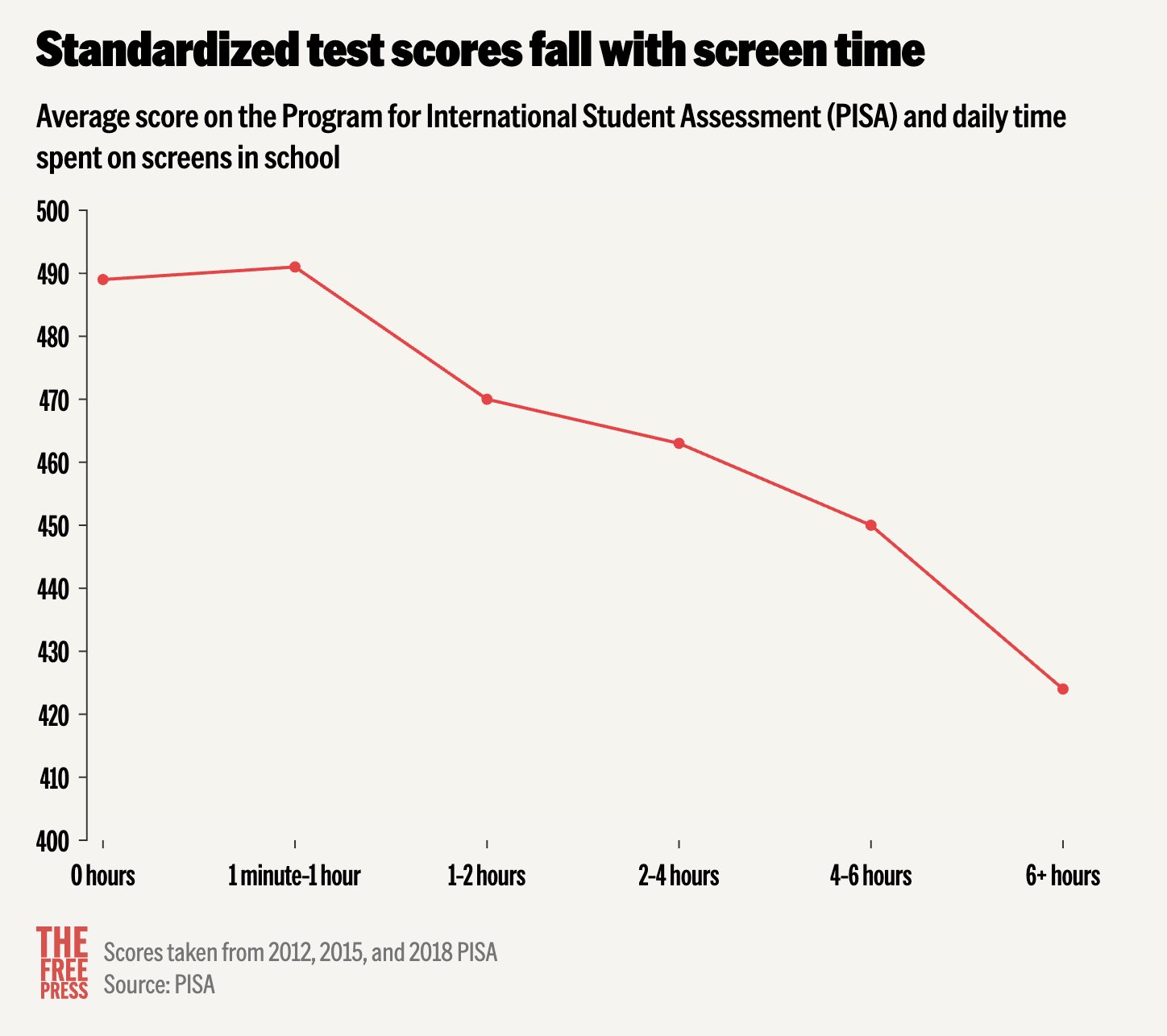
Chart of the Day
Obviously, we can think of ommitted variables, but still, this is a striking charg, from Jared Cooney Horvath at The Free Press.
Meme of the Day
(Yes, it's real.)